
In the world of board games, some titles are over in a flurry of dice rolls and laughter. But then there are those that pull you in, challenge your thinking, and keep you glued to the table for hours. These games don’t rely on luck or flashy gimmicks; instead, they thrive on careful planning, smart resource management, and tactical decision-making. Every move matters. Every choice could shift the balance. And that’s exactly why players can’t get enough.
But what makes strategic board games so captivating? And why do some titles stand out more than others in this growing genre?
The Allure of Strategic Depth
At the heart of every great strategy game lies meaningful decisions. Whether you’re allocating resources, anticipating an opponent’s move, or timing an action just right, these games reward players who think several steps ahead. Unlike lighter party games, strategic titles ask players to invest mentally and that investment creates a satisfying payoff.
Many of these games also offer multiple paths to victory. That flexibility means players can explore different play styles and strategies across sessions, keeping each game fresh and unpredictable. As your understanding of the mechanics deepens, so does your ability to master the game, creating a powerful sense of growth.
Let’s explore a few standout titles that exemplify what makes strategic board games so addictive, including one exciting newcomer.
ARDEVUR: The Game of Resources
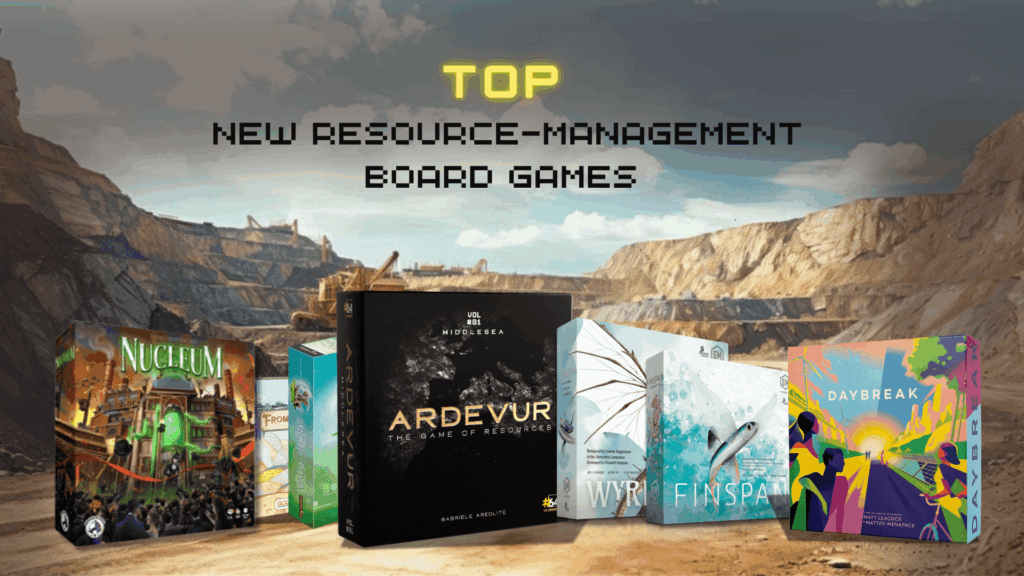
A fresh entry into the strategy landscape, ARDEVUR: The Game of Resources challenges players to manage competing industries, exploit geological resources, and navigate shifting economic trends. What sets ARDEVUR: The Game of Resources apart is its dynamic resource market where supply, demand, and environmental impact interact in complex, realistic ways.
Each player must develop infrastructure, balance short-term profits with long-term sustainability, and make strategic alliances or rivals. The game encourages thoughtful timing and efficiency; rush a mining operation too quickly, and you might deplete your reserves. Delay too long, and another player might outmaneuver you. With multiple interconnected systems, ARDEVUR: The Game of Resources offers a rich and rewarding experience for fans of economic simulation and strategic planning.
Terraforming Mars
In Terraforming Mars, players take on the role of corporations competing to make the Red Planet habitable. This heavyweight strategy game is beloved for its engine-building mechanics where early investments in production gradually snowball into powerful turns. Every choice feels impactful: Do you boost your titanium output or focus on heat production? Expand your city or invest in global terraforming projects?
The game’s blend of long-term strategy and tactical card play means no two sessions feel the same. It’s a prime example of how layered decision-making and incremental gains keep players immersed for hours.
Brass: Birmingham
Set during the Industrial Revolution, Brass: Birmingham is an economic strategy game focused on network-building, resource flow, and timing. What keeps players locked in is the delicate balance between collaboration and competition. Players build canals and railways that can be used by others but sometimes that’s exactly what you want to happen.
With limited actions and ever-changing board states, each decision must be calculated. Should you build a coal mine others can benefit from, or wait for the right moment to monopolize a resource? Brass offers constant tension, strategic trade-offs, and deep satisfaction.
Gaia Project
A spiritual successor to Terra Mystica, Gaia Project explores space colonization through highly asymmetric factions and resource management. What keeps strategy fans engaged is customizability and depth.
Strategic pacing, efficient upgrades, and spatial positioning are all critical. It’s a game that rewards repeat plays, deep study, and adaptation, appealing to players who enjoy mastering intricate systems.
Why We Keep Coming Back
Strategic board games like ARDEVUR: The Game of Resources, Terraforming Mars, Brass: Birmingham, and Gaia Project all offer something more than just entertainment, they are intellectual challenges, puzzles that unfold in real time, and social experiences where the tension is shared across the table.
What makes them addictive is not just the gameplay, it’s the sense of control, creativity, and consequence. Each game feels like a story you help shape through your actions. That emotional and cognitive engagement is why players return, session after session, for “just one more game.”
So whether you’re looking to fine-tune your long-term planning skills, outmaneuver your rivals, or simply lose yourself in a deeply strategic world, these games prove that a few pieces of cardboard and some clever mechanics can keep us hooked for hours.